
What Decides the Right Workplace Vending Machine
The right workplace vending machine depends on five things: how many people use the site each day, the floor space available, access to a power socket, the mix of snacks and drinks your staff want, and the hours the building is in use. Matching the machine to those factors keeps it stocked, reliable and well used.
This article explains how each of those factors affects the choice, using the real dimensions and features of the machines we install for businesses in Dublin and across Ireland, so you know what to expect before a site survey.
Footfall and Staff Numbers
Demand is the starting point. A workplace vending machine needs a steady level of sales to justify regular restocking visits, so we normally look for a minimum of 20 employees on site, or a location with a high number of customers, visitors or contractors passing through. Below that level, a machine is unlikely to sell enough to stay fresh and fully stocked.
Above that level, the number of people affects the size and number of machines rather than whether vending is possible at all. A busy distribution centre with staff on several shifts may suit a large-capacity machine, or two machines in different parts of the building, while a smaller office may be better served by a compact model. During the site survey, our representative looks at staff numbers, shift patterns and how people move around the premises before recommending how many machines to install.
Working hours are just as important as headcount. Sites that operate early mornings, evenings, nights or weekends often rely on vending more than standard office hours sites do, because staff cannot easily reach local shops during their breaks.
Machine Sizes and Floor Space
The size of the machine has to suit both the chosen spot and the route into the building. Our two most popular models are the Tango vending machine, which measures 1830mm high, 890mm wide and 793mm deep, and the slightly narrower Jazz vending machine, which measures 1830mm high, 735mm wide and 855mm deep.
Beyond the footprint of the machine itself, there needs to be space in front for people to stand and choose, and enough clearance for the door to be opened fully during restocking and servicing. Doorways, corridors, stairs and lifts on the way to the final position all need to accommodate the machine on delivery, which is one of the things checked during the survey.
As a general guide, larger machines suit high-footfall workplaces because they hold a wider product range and more stock between visits. Mid-sized machines balance capacity and selection without taking up too much space, and compact machines work well in smaller workplaces or lower-usage areas where essentials matter more than a long product list.
Snack and Drink Combinations
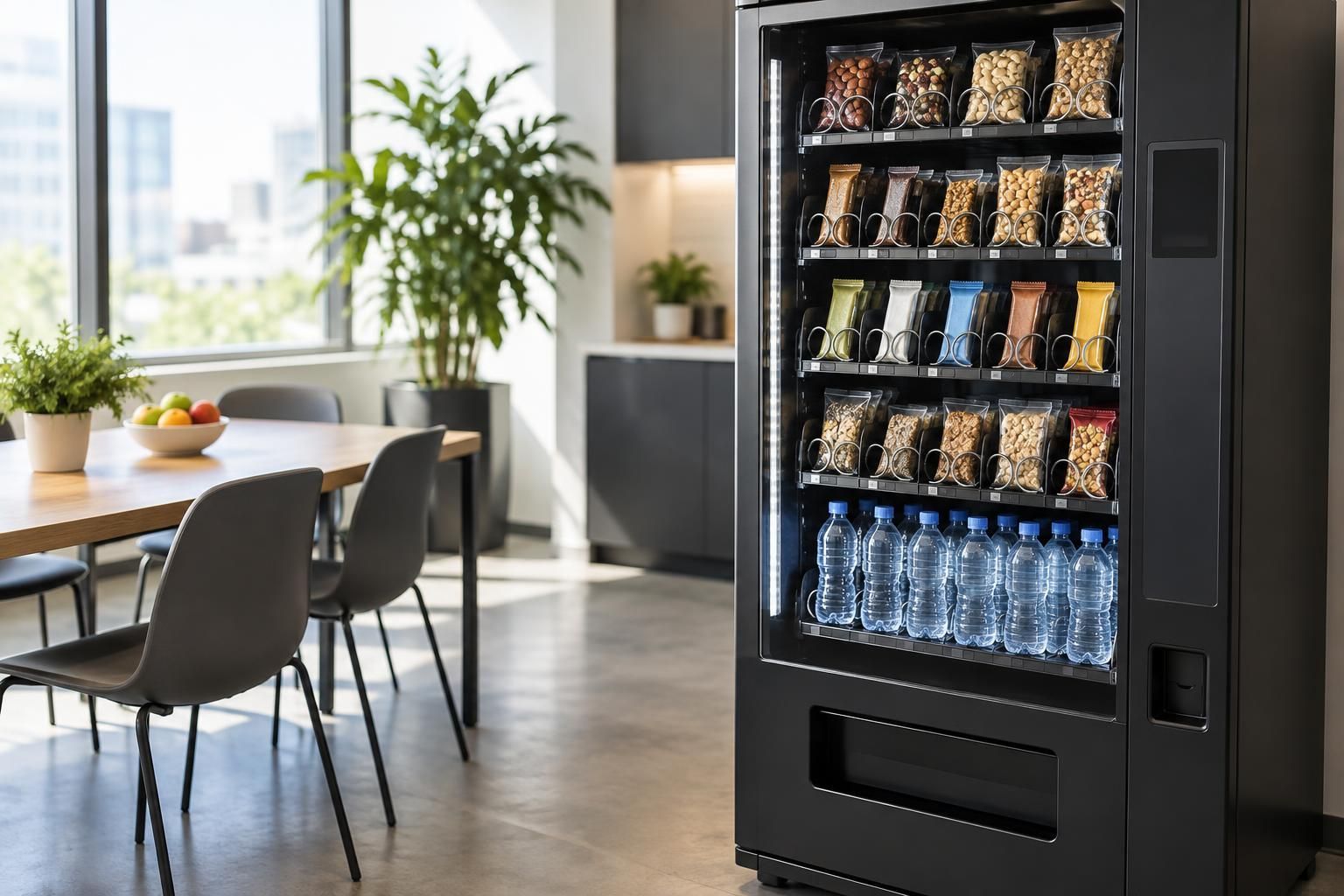
A workplace vending machine can be set up for snacks, for drinks or for both. The Tango, for example, has dual temperature zones, so a single machine can hold fresh food, snacks, confectionery, cans and bottles in a combination chosen for the site. This is often the most practical choice for workplaces with room for only one machine.
Starting the Product Range
We first stock each machine with the most popular products, including crisps, chocolate, soft drinks and healthier snacks. Healthy options include popcorn, granola and protein bars, nuts and seeds, and bottled water. Once the machine is installed, we monitor sales, replace low-demand products with new ones and welcome requests from the people using it. Our article on cashless vending machines and contactless payment explains how sales data helps us keep the right products in stock.
Drinks and the Deposit Return Scheme
Since Ireland's Deposit Return Scheme went live on 1 February 2024, drinks in PET plastic bottles and aluminium or steel cans between 150ml and 3 litres carry the Re-turn logo and a refundable deposit, 15 cent for containers up to 500ml and 25 cent for larger ones. Staff can return the empty, undamaged containers at participating shops and supermarkets to reclaim the deposit. Vending machine operators have a take-back exemption under the scheme, so containers are not returned to the machine itself; instead, the machine displays a notice with a QR code showing where the nearest return points are.
Placement Inside the Building
Where the machine goes has a direct effect on how much it is used. The goal is always to place the machine where it will receive the most traffic, which is usually indoors in a visible area that people pass several times a day.
Offices and Reception Areas
In offices, the best positions tend to be break rooms, kitchens and canteen areas, or the corridor leading to them. In buildings that receive regular visitors, a machine near reception gives people waiting for a meeting or an appointment something on hand without staff having to leave their desks.
Factories, Warehouses and Distribution Centres
On industrial sites, machines work best in canteens, rest areas and near clocking-in points, where staff gather at the start and end of shifts and during breaks. Placing the machine away from vehicle routes and production areas also keeps it out of the way of forklifts and away from dust. A visible, well-used position also helps prevent vandalism, and where it is needed we can fix the machine to the wall or floor and fit labels warning against rocking or moving it.
Energy Use and Running Costs
Because the machine plugs into the building's own power supply, energy efficiency is worth considering. The Tango uses an energy-efficient system with an A+ rating, which helps reduce running costs while keeping products at the right temperature. All servicing and repairs are handled by us, with a technician guaranteed on site within 48 hours if a machine breaks down.
Getting the Right Workplace Vending Machine Installed
Choosing the right workplace vending machine comes down to matching the machine to the people, the space and the product range at your premises. With the right size, the right mix of snacks and drinks and the right position, a machine becomes a reliable, well-used facility for staff and visitors in Dublin and throughout Ireland. Our guide to how free vending machines for business work explains why there is no cost to qualifying workplaces, and our gallery of vending machine installations shows machines in place at client sites.
To find out which machine suits your premises, contact Anna's Vending to book a free site survey. You can call us on 086 788 1212 or email info@annasvending.ie.
What Decides the Right Workplace Vending Machine
The right workplace vending machine depends on five things: how many people use the site each day, the floor space available, access to a power socket, the mix of snacks and drinks your staff want, and the hours the building is in use. Matching the machine to those factors keeps it stocked, reliable and well used.
This article explains how each of those factors affects the choice, using the real dimensions and features of the machines we install for businesses in Dublin and across Ireland, so you know what to expect before a site survey.
Footfall and Staff Numbers
Demand is the starting point. A workplace vending machine needs a steady level of sales to justify regular restocking visits, so we normally look for a minimum of 20 employees on site, or a location with a high number of customers, visitors or contractors passing through. Below that level, a machine is unlikely to sell enough to stay fresh and fully stocked.
Above that level, the number of people affects the size and number of machines rather than whether vending is possible at all. A busy distribution centre with staff on several shifts may suit a large-capacity machine, or two machines in different parts of the building, while a smaller office may be better served by a compact model. During the site survey, our representative looks at staff numbers, shift patterns and how people move around the premises before recommending how many machines to install.
Working hours are just as important as headcount. Sites that operate early mornings, evenings, nights or weekends often rely on vending more than standard office hours sites do, because staff cannot easily reach local shops during their breaks.
Machine Sizes and Floor Space
The size of the machine has to suit both the chosen spot and the route into the building. Our two most popular models are the Tango vending machine, which measures 1830mm high, 890mm wide and 793mm deep, and the slightly narrower Jazz vending machine, which measures 1830mm high, 735mm wide and 855mm deep.
Beyond the footprint of the machine itself, there needs to be space in front for people to stand and choose, and enough clearance for the door to be opened fully during restocking and servicing. Doorways, corridors, stairs and lifts on the way to the final position all need to accommodate the machine on delivery, which is one of the things checked during the survey.
As a general guide, larger machines suit high-footfall workplaces because they hold a wider product range and more stock between visits. Mid-sized machines balance capacity and selection without taking up too much space, and compact machines work well in smaller workplaces or lower-usage areas where essentials matter more than a long product list.
Snack and Drink Combinations
A workplace vending machine can be set up for snacks, for drinks or for both. The Tango, for example, has dual temperature zones, so a single machine can hold fresh food, snacks, confectionery, cans and bottles in a combination chosen for the site. This is often the most practical choice for workplaces with room for only one machine.
Starting the Product Range
We first stock each machine with the most popular products, including crisps, chocolate, soft drinks and healthier snacks. Healthy options include popcorn, granola and protein bars, nuts and seeds, and bottled water. Once the machine is installed, we monitor sales, replace low-demand products with new ones and welcome requests from the people using it. Our article on cashless vending machines and contactless payment explains how sales data helps us keep the right products in stock.
Drinks and the Deposit Return Scheme
Since Ireland's Deposit Return Scheme went live on 1 February 2024, drinks in PET plastic bottles and aluminium or steel cans between 150ml and 3 litres carry the Re-turn logo and a refundable deposit, 15 cent for containers up to 500ml and 25 cent for larger ones. Staff can return the empty, undamaged containers at participating shops and supermarkets to reclaim the deposit. Vending machine operators have a take-back exemption under the scheme, so containers are not returned to the machine itself; instead, the machine displays a notice with a QR code showing where the nearest return points are.
Placement Inside the Building
Where the machine goes has a direct effect on how much it is used. The goal is always to place the machine where it will receive the most traffic, which is usually indoors in a visible area that people pass several times a day.
Offices and Reception Areas
In offices, the best positions tend to be break rooms, kitchens and canteen areas, or the corridor leading to them. In buildings that receive regular visitors, a machine near reception gives people waiting for a meeting or an appointment something on hand without staff having to leave their desks.
Factories, Warehouses and Distribution Centres
On industrial sites, machines work best in canteens, rest areas and near clocking-in points, where staff gather at the start and end of shifts and during breaks. Placing the machine away from vehicle routes and production areas also keeps it out of the way of forklifts and away from dust. A visible, well-used position also helps prevent vandalism, and where it is needed we can fix the machine to the wall or floor and fit labels warning against rocking or moving it.
Energy Use and Running Costs
Because the machine plugs into the building's own power supply, energy efficiency is worth considering. The Tango uses an energy-efficient system with an A+ rating, which helps reduce running costs while keeping products at the right temperature. All servicing and repairs are handled by us, with a technician guaranteed on site within 48 hours if a machine breaks down.
Getting the Right Workplace Vending Machine Installed
Choosing the right workplace vending machine comes down to matching the machine to the people, the space and the product range at your premises. With the right size, the right mix of snacks and drinks and the right position, a machine becomes a reliable, well-used facility for staff and visitors in Dublin and throughout Ireland. Our guide to how free vending machines for business work explains why there is no cost to qualifying workplaces, and our gallery of vending machine installations shows machines in place at client sites.
To find out which machine suits your premises, contact Anna's Vending to book a free site survey. You can call us on 086 788 1212 or email info@annasvending.ie.

